Section: CS 2
 556
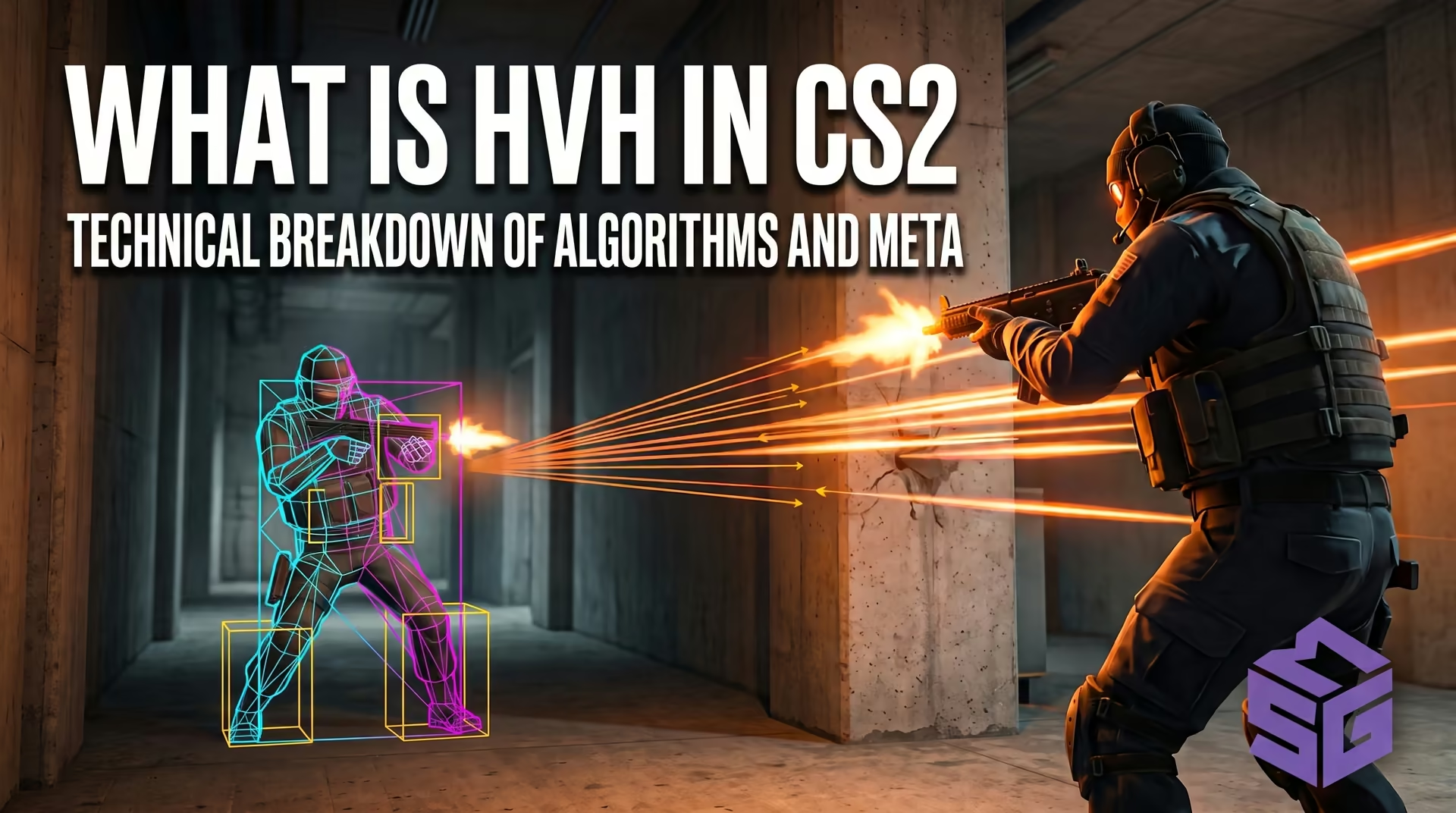
When a blatant rage hacker ruins standard matchmaking, most players simply close the game in frustration. But there is an entirely separate scene where private software is not about stomping newcomers without consequence—it is an arena where algorithms, custom scripts, and raw mathematics collide. As the developers behind SMGCHEATS private cheats, we break down what HvH is, explore how Source 2 duels work under the hood, and explain why your config—not your reaction time—decides every round.
| Parameter | HvH Environment | Standard CS2 Match |
|---|---|---|
| Primary Objective | Outplay the enemy cheat's algorithms | Win through mechanical skill and team tactics |
| Shooting Mechanics | Automated (Ragebot with Auto-Wall calculation) | Manual (mouse aiming and recoil control) |
| Body Positioning | Physical hitbox distortion (Anti-Aim / Jitter) | Standard player model animations |
| Hit Registration | Animation reconstruction via AnimFix | Direct aim on visible hitboxes |
| Server Environment | Dedicated community servers (-insecure) | Official Valve servers (Matchmaking / Premier) |
HvH is a duel between automated systems. To an outside observer, matches look like pure chaos: player models jitter erratically, stare straight into the floor, and eliminate opponents through solid concrete walls without manual aiming. Here is how those mechanics actually operate.
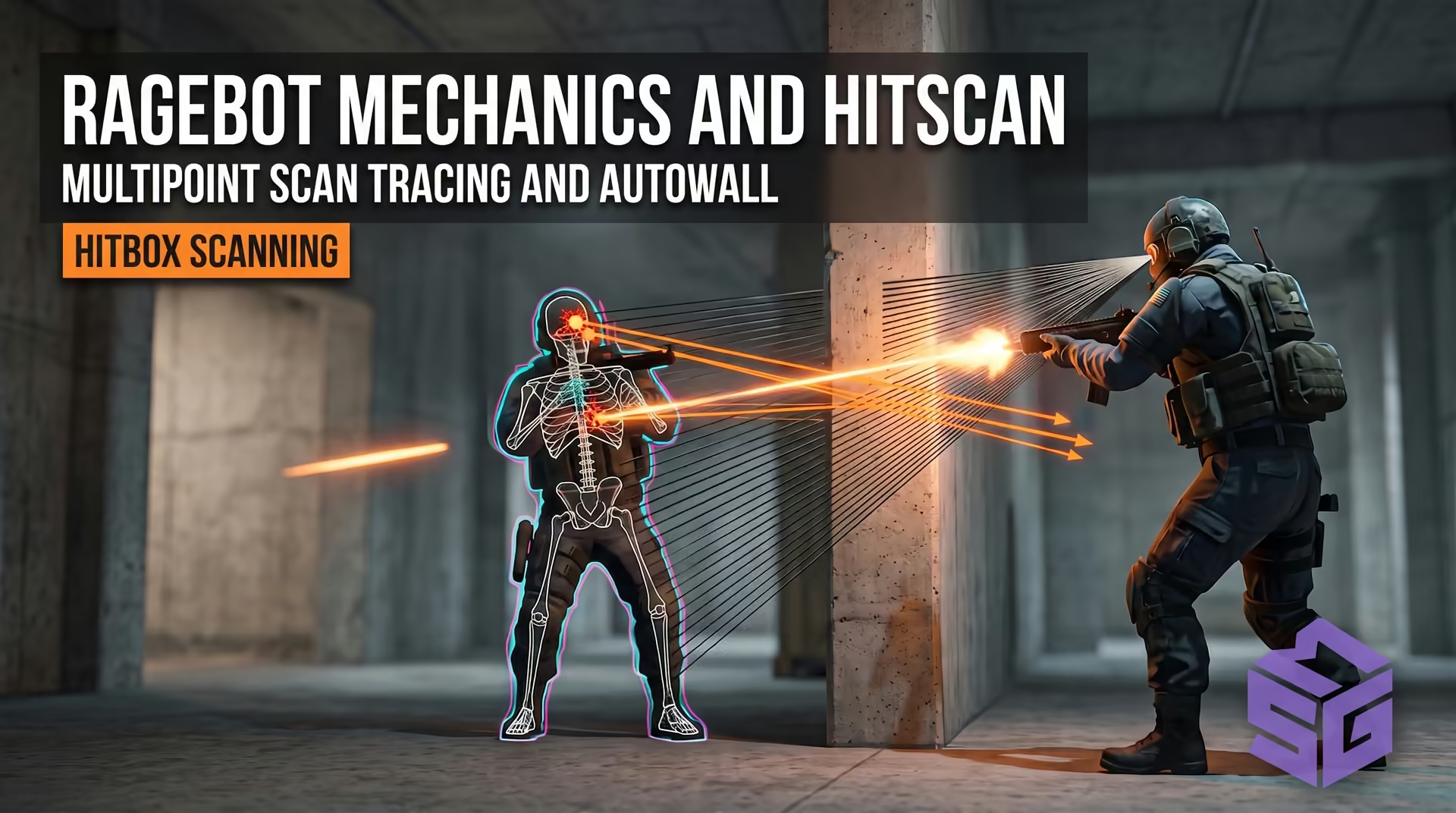
Unlike legit software that smoothly glides your crosshair, a Ragebot fires instantaneously across a full 360-degree field of view (FOV). The algorithm continuously scans the enemy player model using dozens of target vectors known as Multipoints. If the center of the head is blocked behind cover, the software instantly switches to the edge of the helmet, the shoulders, or designated Safe Points across the torso.
The real technical heavy lifting happens inside the Auto-Wall engine. Within a single frame (under 1.8 ms), the software casts anywhere from 32 to 128 ray traces through map geometry. It evaluates material densities—wood, metal, concrete—and calculates terminal bullet penetration damage based on kinetic energy falloff. If projected damage drops below your configured MinDamage threshold, the software suppresses the shot to conserve ammunition.
Back in CS:GO, defense relied entirely on Desync—splitting the player model into client-side (Fake) and server-side (Real) angles. That concept is dead in CS2. Source 2 strictly synchronizes ViewAngles, making client-server phantom desync impossible.
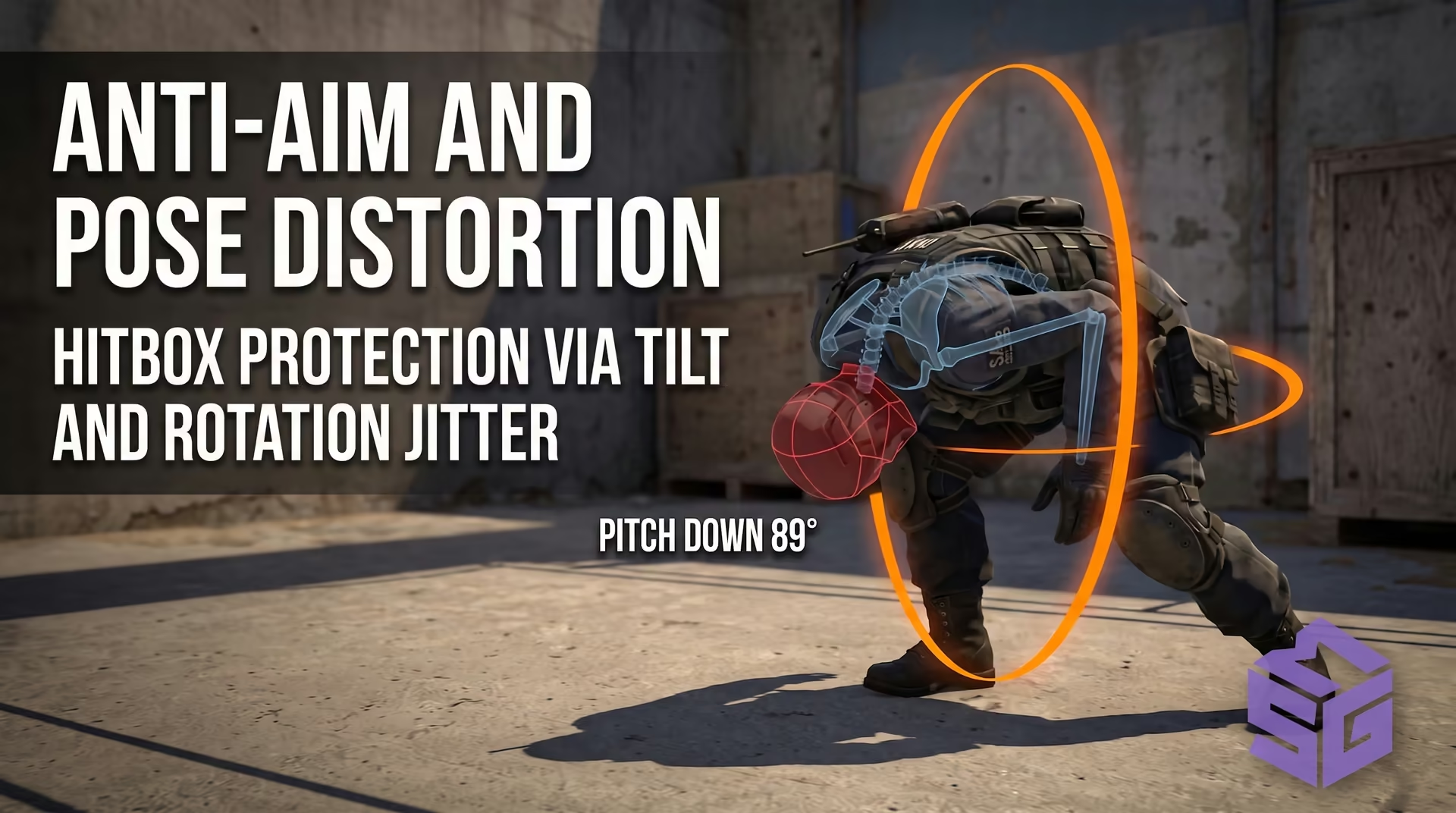
Modern CS2 Anti-Aim (AA) focuses instead on aggressive physical hitbox manipulation:
The cheat angles your model to expose as little vulnerable surface area as possible when peeking. Opponents see a twitching target that makes landing a clean first-round hit extraordinarily difficult.
The transition to Source 2 completely dismantled the old meta. Legacy CS:GO guides are technically obsolete because the underlying network architecture underwent a total overhaul.
In CS2, primary exploits had to be completely re-engineered around the Sub-Tick protocol:
Warning: Running aggressive Anti-Aim or RapidFire features on official Valve servers (Premier, Competitive Matchmaking) results in an immediate match cancellation.
VAC Live strictly validates unnatural viewing angles, flagging untrusted pitch and roll values in real time. If a client attempts to invert pitch past valid limits or sends malformed command packets, the system triggers an immediate match abort and cooldown. This is why running full rage features in is restricted strictly to dedicated community platforms.
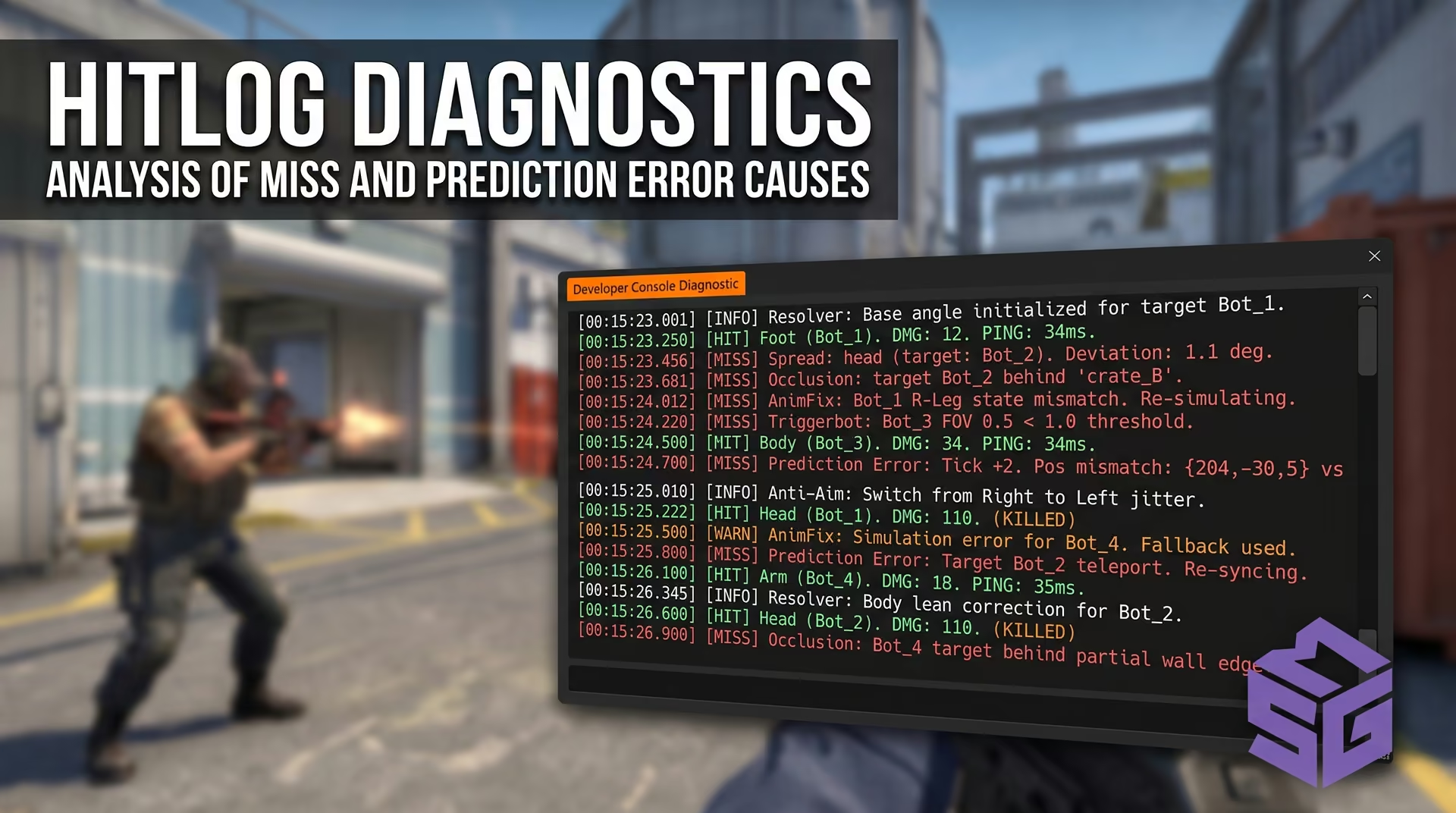
High-tier software always logs why a shot failed. Whenever a fired round deals zero damage, the software outputs detailed diagnostics to the developer console or on-screen overlay.
Hitlog analysis categorizes missed shots into 7 distinct failure states. Use this breakdown to dial in your configuration:
| Hitlog Error Type | Underlying Cause | CFG Fix |
|---|---|---|
| Missed due to Spread | Inherent weapon inaccuracy. The bullet strayed outside the hitbox because Hitchance was configured too low. | Increase the weapon's Hitchance (HC) value. |
| Missed due to Occlusion | Auto-Wall predicted a penetrable surface, but the bullet hit an impenetrable clip brush or map collision. | Increase MinDamage to filter out marginal wallbangs, or avoid peeking tight corner edges. |
| Missed due to AnimFix | Desynchronization between server movement animations and client bone matrix calculations during rapid rotations. | Typically an internal provider issue; update custom scripts or reinject. |
| Missed due to Backtrack | Lag compensation matrix mismatch. The server rejected the historical hitbox record for the requested tick. | Tune your Lag Compensation window and latency settings. |
| Missed due to Prediction | Local client prediction mismatch during sub-tick movement processing. | Common on unstable connections; optimize ping or adjust packet smoothing. |
| Unregistered Shot | Packet loss on the server route or an engine-level hit registration drop. |
The HvH community operates on a dedicated private infrastructure entirely isolated from official competitive matchmaking.
Dedicated community servers fall into two primary categories that dictate combat mechanics:
Connecting to custom servers requires launching CS2 with the -insecure launch option. This parameter disables Valve Anti-Cheat modules, blocking access to official queues while keeping cheat injection on community servers safe from automated VAC bans. These servers run on custom frameworks featuring modified game physics and round economies. To keep their main accounts and machine credentials protected, veteran players pair their setup with a .
An expensive cheat paired with a sloppy config (CFG) will consistently lose to entry-level software tuned to perfection. Building dedicated weapon profiles forms the foundation of competitive play.
Each primary weapon category requires specialized tuning:
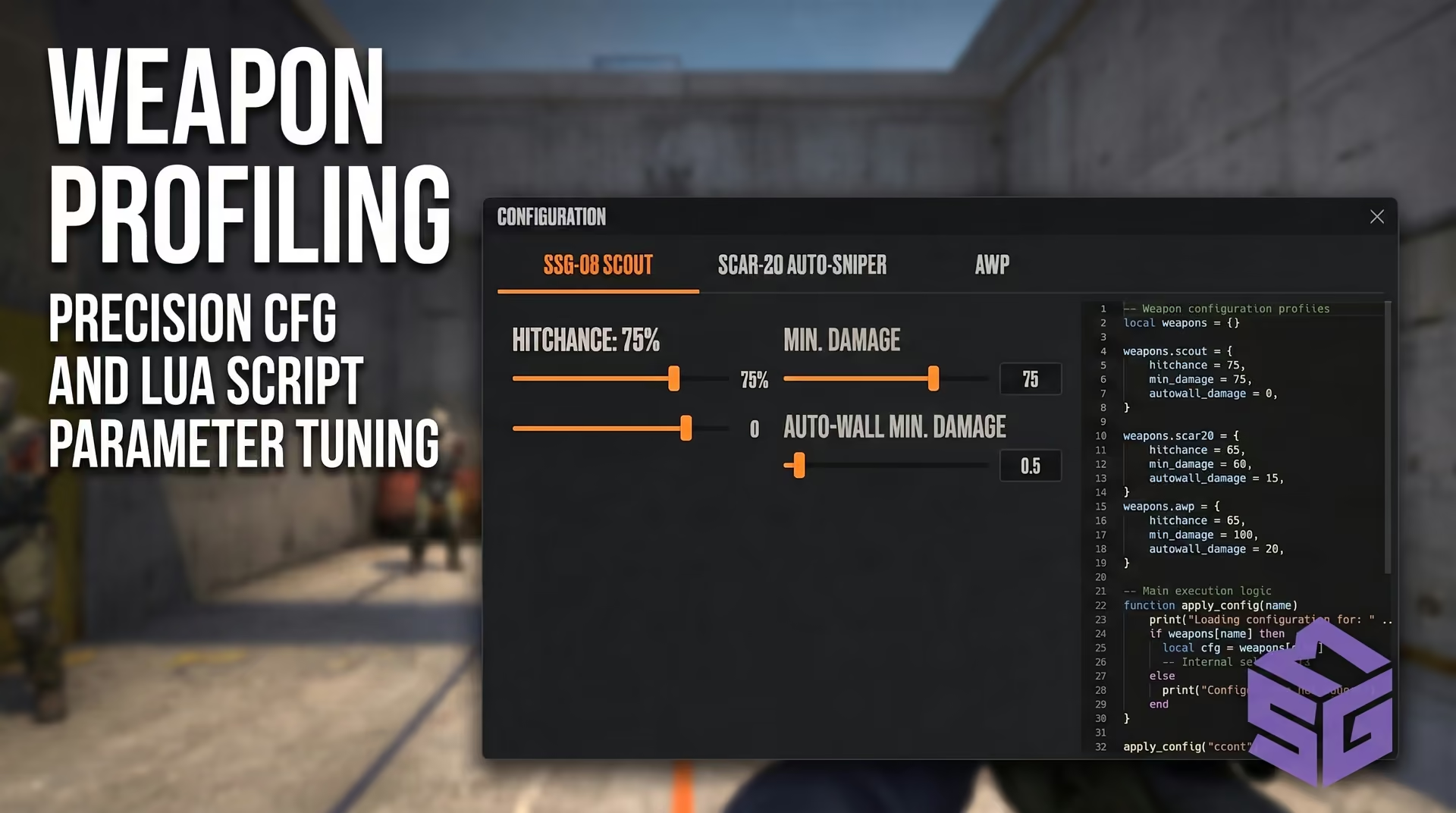
Experienced players rarely rely on default menu presets. A built-in Lua API unlocks custom scripting: writing Anti-Bruteforce logic (automatically flipping your Jitter phase when an opponent misses), displaying real-time vulnerability indicators, and rendering Grenade Helpers that trace optimal utility lineups.
Over years of competition, the scene developed its own distinct terminology and subculture. Understanding this vocabulary is essential when jumping into community servers.
Reputation on community servers reflects technical knowledge and standing within the scene:
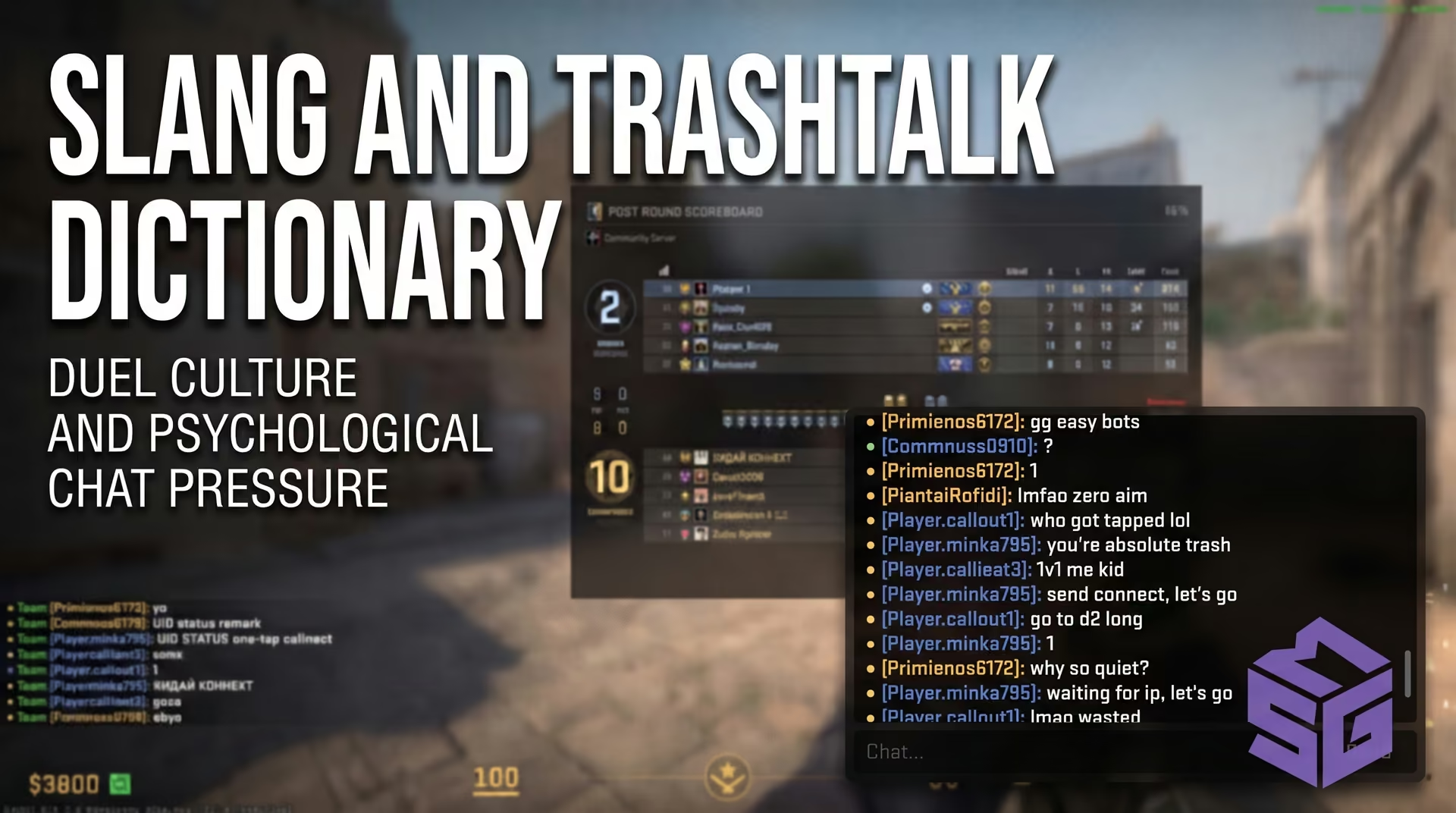
In-game chat is frequently used to apply psychological pressure during matches:
Playing HvH is far more than toggling a cheat—it demands a granular understanding of game mechanics, netcode architecture, and Source 2 engine math. The winning edge always belongs to the player who dials in their prediction, peeking angles, and configuration to match the server environment.
HvH stands for Hack vs. Hack. It is a competitive format where players openly use private cheats on specialized community servers, testing their configuration builds, custom scripts, and software logic against one another.
Valve's VAC Live system actively monitors view angles and incoming network packets. If a client transmits impossible values (like Pitch Down) or spams user commands via RapidFire, the server aborts the match and issues a cooldown. Rage duels must be played exclusively on dedicated community servers running the -insecure parameter.
In Source 2, player ViewAngles are strictly validated and synchronized by the server, eliminating client-side phantom desync. Modern defense instead relies on physically tucking hitboxes (Pitch Down), disrupting aimbot prediction with Yaw Jitter, and executing calculated peeks.
Technically yes, but you will be at a massive disadvantage. Free public pastes feature crude AnimFix routines and rudimentary Auto-Wall calculations. They struggle to resolve modern private anti-aims, leaving you missing consistently against tuned opponents.
Because fake angles no longer exist, legacy resolvers that brute-forced real angles through Desync are obsolete. CS2 replaces them with AnimFix modules and sub-tick movement prediction.
When an opponent runs aggressive spinbot routines, server animations frequently break and fall out of sync. A modern resolver's job is rebuilding the actual skeletal matrix during rapid rotations while compensating for network latency. If the cheat miscalculates enemy interpolation, local prediction fails, and your shot hits empty air.
| Outside config control; caused by poor server hosting or network drops. |
| Missed due to Safe Point | Shot fired at an exposed limb, but target movement shifted the hitbox out of the trajectory mid-tick. | Force Body Aim (Baim) or tighten Safe Point requirements. |
Interpreting console hitlogs is essential for fine-tuning your config. A standard diagnostic line reads like this:
[MISS] Target: Bigname_Player | Hitbox: Head | Reason: Prediction Error / AnimFix | Expected DMG: 105 | Actual DMG: 0This log shows the ragebot expected to land a 105-damage headshot, but the round missed due to a prediction error and AnimFix desync caused by the opponent's sudden directional change. Recognizing these events allows you to force Safe Points or raise your Hitchance before the next engagement.